
Sources for Woodbridge Previous Residents
A backward Woodbridge address trail has distinct eras. The current parcel view supplies a starting address and GPIN, the county’s property identification number. Recorded deeds provide the land-transfer chain. The Historic Online Portal, known as HOP, and archival collections extend the search before the main online deed coverage. Dated directories add household context but do not prove ownership or current residence. Use the legal description and source date to keep the sources connected when the visible street number is new, renamed, or part of a later subdivision.
| Source | Years it covers | Where held | What it can show |
|---|---|---|---|
| Assessment parcel and County Mapper | Current parcel view | Prince William Tax Administration and GIS | Address, GPIN, parcel shape, sale and legal-description leads. |
| Eagle Recorder deeds and plats | 1918-present | Circuit Clerk | Recorded parties, instrument date, book or page, legal description, and images where available. |
| Historic Online Portal | Before 1918; historic material varies | Circuit Clerk | Historic deeds and loose papers that are outside the modern route. |
| Prince William Deeds Index | 1731-1827 | RELIC digital archives, HOP, and LVA | Early deed-name leads that require further checking. |
| Regional directories and phone books | 1963-1980; selected phone years; later county volumes | RELIC | Dated household, address, or telephone context. |
These sources answer different questions. A party to a deed is not automatically a resident, and a directory listing is not a deed. Previous residents should be identified only when the independent dates and records fit together.
Woodbridge Parcel Records First
Begin a Woodbridge property history with the current Real Estate Assessments view and the Prince William County Mapper. The assessment view can supply current sale and legal-description leads. Search the street number and street name in Mapper, then note the GPIN, address, parcel boundaries, and active layers. The map is informational rather than a legal survey. At close scale, its Show Parcel Info tool can reveal the address and GPIN. The separate Parcel History Tree follows parent-to-child and child-to-parent GPIN relationships, which is essential when a present lot was carved out of an earlier parcel.
The official County Mapper provides the query and parcel-results view used to begin a Woodbridge previous residents trail.
A parent GPIN is a parcel-history lead, not evidence that a person moved. Compare the split or merger with the deed, plat, legal description, and date before carrying a household conclusion back to the parent land.
Keep the three current-property sources in their separate roles. Real Estate Assessments can supply annual assessment, sale, valuation, and legal-description leads. County Mapper supplies geography, layers, and parcel identification. The recorded deed supplies the instrument evidence for a transfer. A tax mailing address may differ from the parcel situs, meaning the property’s physical address. That distinction matters when tracing previous residents, because a tax record can connect an owner to a mailing address without showing that the owner lived at the property.
Woodbridge Deed Records Backward
After the GPIN and legal description are in hand, use the Circuit Clerk’s Eagle Recorder instructions to search the recorded instrument chain. Deed indexes and images begin in 1918, as do plats. Start with the current transfer, copy the grantor, grantee, recording date, instrument number or book and page, and the legal description. Then search the seller as the earlier grantee. Date and document number are better anchors than a name alone, especially when an address changed or several people share a name.
- Find the current parcel and copy its GPIN, situs address, and legal-description lead.
- Locate the most recent recorded transfer by party, date, book and page, instrument number, or legal filters.
- Record both named parties and their roles, then search the earlier buyer as grantee.
- Repeat the sequence backward, preserving every instrument date, page, and legal description.
- Branch to a parent parcel, plat, HOP, or archive only when the recorded chain shows a split, gap, or earlier era.
| Last Name / Organization | Full or partial last name, or an organization, can narrow a recorded-party search. |
|---|---|
| Party | A first or second recorded party can be used as a narrowing field. |
| Recorded Within | A date range with Today and Yesterday shortcuts. |
| Categories / DocTypes | Advanced record-category and document-type selectors. |
| Book/Page or Instrument Number | An instrument-search route for a known document reference. |
The official Eagle Recorder occasional-user page describes its index, image, shopping-cart, and copy paths.
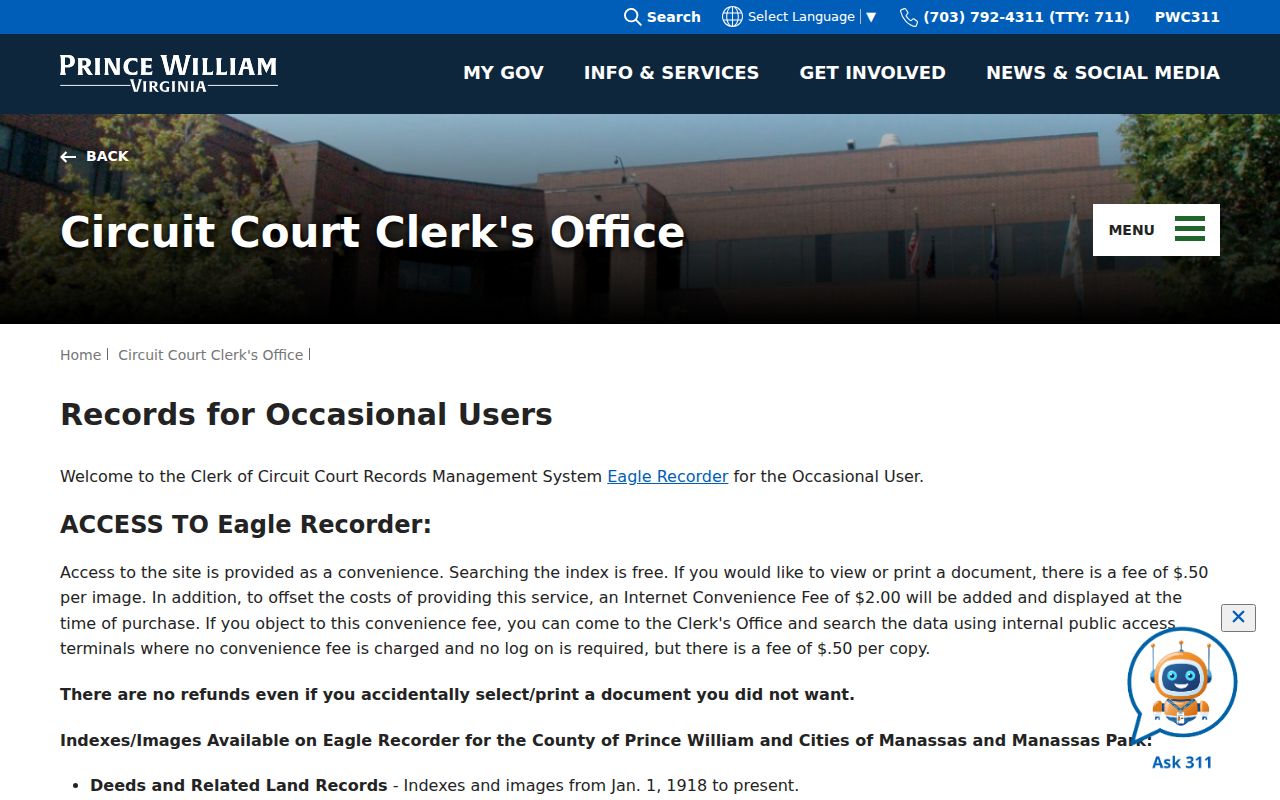
The free index is a starting point. Images or copies may involve an account and charges, while courthouse terminals provide another access channel for records research.
Woodbridge Property Record Terms
Land records use roles and descriptions that should stay distinct from household evidence. A street address can be a convenient search key, but a legal description is the parcel language carried through recorded instruments. Read each term in the document’s date and context. An assessment sale date can help locate a transfer, but the recorded deed is the instrument that documents the transfer itself.
- Grantor
- The party transferring an interest in a recorded deed.
- Grantee
- The party receiving an interest in that recorded deed.
- Chain of title
- The documented sequence of recorded transfers connected through parties, dates, and legal descriptions.
- Legal description
- The lot, tract, subdivision, or other recorded land description used to identify the property more precisely than an address.
- GPIN
- Prince William County’s property identification number, used to connect GIS, tax, and parcel-history research.
Woodbridge Historic Records Beyond 1918
For an older Woodbridge address or tract, the modern deed index is not the end of the trail. HOP reaches into historic deeds and loose papers, while RELIC’s digitized Prince William Deeds Index covers 1731 through 1827. The Library of Virginia preserves county microfilm and chancery material. Search those paths in parallel when the historical date demands it. A chancery file can help only when a dispute created a file, and an early index hit still needs the supporting record image or related deed evidence.
The RELIC digital archives include the early Prince William deed index and related historic projects.
The digital index can point toward an early name or tract, while HOP, Library of Virginia microfilm, and the underlying record provide the next level of confirmation.
Woodbridge Address Records and Route 1
Woodbridge address history has an important two-name test. Route 1 changed from Jefferson Davis Highway to Richmond Highway through the county renaming process. Older deeds, directories, newspapers, and court documents can retain the former name. Search both forms and keep the source’s original street name in the research notes. The county also keeps renumbering and reassignment archives, and official addressing can distinguish buildings, suites, and apartments. An unfamiliar number is not proof of a typo or a move.
Use the Prince William Route 1 renaming record as the crosswalk for an old Jefferson Davis Highway reference. Note: a street-name change can explain a search gap, but it does not establish that the same household stayed at the address.
Woodbridge Past Household Records
Ownership is only one part of the question of who lived here before. RELIC’s regional printed directories can add a dated address, occupation, telephone, or selected household detail. The Woodbridge-area run is regional and historical, not a current residency source, covering Quantico, Triangle, Dumfries, Woodbridge, and Occoquan from 1963 through 1980. Later Prince William volumes cover 2001 and 2007 through 2020. Telephone directories also extend across selected years. Treat each volume as a time slice and use a crisscross address or phone section to test a historical address.
The official RELIC directory-year guide identifies the printed regional and county volumes used for a past-residents question.
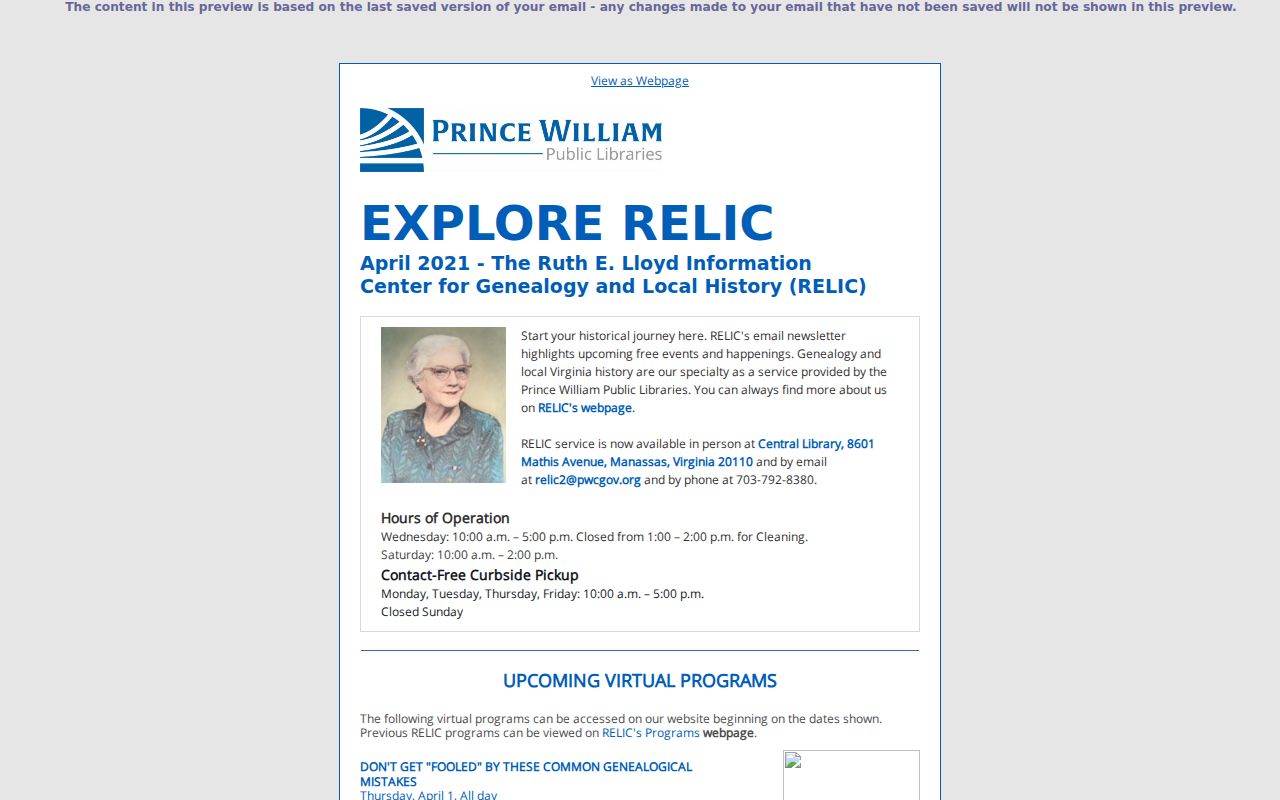
For full collection details and how to read the entries, use the Woodbridge city directory collections; the address trail should keep the volume year separate from the land-record chain.
- Match a known address or surname to the closest available dated directory volume.
- Copy the page, address spelling, publication year, and any visible household fields.
- Test the address through the crisscross or telephone section when the volume contains one.
- Pair the time slice with a deed, parcel, Local News Index item, probate record, cemetery source, or eligible vital record.
The Local News Index starts in 1993 for the Potomac News and Manassas Journal Messenger, with some obituaries reaching 1970. Request the article or microfilm image after an index hit, because the index alone is a lead.
Woodbridge Records at RELIC and LVA
RELIC supports a focused visit with directories, county microfilm, maps, family files, newspapers, photographs, yearbooks, and digital-preservation tools. The Library of Virginia adds statewide directories, censuses, chancery material, Virginia Chronicle, and its Prince William county guide. Bring a precise surname, street, tract, or year, then capture the source title, page or reel, and date. Those details make it possible to test a later match rather than merging separate people with a similar name.
The RELIC genealogy collection is the county’s main local-history starting point for Woodbridge research.
RELIC and the Library of Virginia provide different access channels, so a missing online result should be followed by the relevant shelf, microfilm, or archival route.
Woodbridge Previous Residents Limits
Prince William’s Civil War-era destruction, removal, and loss of early books mean that historic gaps are real. The county announced in 2023 that Liber A from 1731-1732 and a Dumfries District order book from 1798-1799 had been returned and digitally copied. That recovery improves a narrow part of the record trail, but it does not cure every missing deed or will book. A negative search belongs in the record log as not located under the search terms and source used.
The Prince William returned-record notice describes the recovered historic books. For a very early trail, combine HOP, RELIC’s early deed index, Library of Virginia microfilm or chancery, and probate, cemetery, or newspaper corroboration.
Lawful use. Woodbridge house-history research is for personal, family, estate, and local-history questions. Do not use a historical trail to stalk, harass, or track a living person.