
Woodbridge Resident Lookup Sources
A Woodbridge resident lookup is a source-by-source task. No single public roster covers the community. A recorded deed names a party, an instrument date, and a parcel description, which makes it a strong anchor when the question is ownership. The Prince William Real Estate Assessments portal adds public assessment and sale context for the same parcel. A Circuit docket entry shows a party's role and the court events around it. VDH holds the state's life-event series. A historical directory can preserve a dated address lead. Keep every result tied to its own date and limit, because a parcel owner is not automatically an occupant and an old directory entry says nothing about today's address.
| Record trail | Narrow fact it supports | Woodbridge keeper | Access boundary |
|---|---|---|---|
| Recorded deed | Party role, instrument date, parcel description | Prince William Circuit Clerk | Index is public; images and certified copies can carry charges |
| Assessment parcel | Public ownership, sale, valuation description | Real Estate Assessments | Verify mailing and parcel-address fields before treating either as residence |
| Court docket | Party role, case events, disposition | Virginia court systems | Sealed, juvenile, adoption, and other confidential records are restricted |
| Vital index or copy | Released life-event information | Virginia Department of Health | Public-age periods do not remove certified-copy eligibility rules |
| Credential search | Public license or business information | Virginia DPOR or SCC | Online information may not be the official record |
Match the record to the question first. A parcel, GPIN, or deed is the stronger route for property questions. Case numbers belong in the court system. An old address or a school-era name fits RELIC's historical material better. Save the source URL, the access date, and the record identifier. Also note the exact field that answered the question. That paper trail pays off later. Before treating any Woodbridge result as an identity match, confirm it with a second independent anchor. Use something like a middle name paired with a date, or a GPIN paired with a legal description.
Woodbridge Court Lookup Fields
Start by selecting Prince William County Circuit Court in the Circuit CJIS search. The public route offers civil or criminal case type plus party-name, case-number, and hearing-date paths. Public case information can include hearings, dispositions, pleadings or orders, and service details. That applies whenever the material is public and scanned. Online Circuit records begin July 1, 1989. Many documents received after July 13, 2009 exist as scans, but coverage is not universal. General District Court and JDR are separate systems. A search in one never reaches the others.
| Result field | What to preserve |
|---|---|
| Party name and role | Whether the person appears as plaintiff, defendant, or another recorded role |
| Case number and type | The unique case identifier and court category |
| Case or filing date | The time period tied to the entry |
| Hearing and event list | The dated procedural history |
| Disposition and tabs | The result status and any public Pleadings/Orders or Service material |
A common-name hit needs an anchor. Add a case number, a role, a date, an address, or another lawful identifying detail before it joins any Woodbridge verification trail. A docket proves no guilt or liability. Nor does it settle identity or current standing. A no-result answer is narrow too, speaking only for the chosen court and the exact search terms entered, while restricted, older, differently indexed, or unscanned material can sit outside the visible response. Public documents come through the Circuit Clerk's copy-request route at $0.50 per page, with certification adding $2 per document.
Verify a Woodbridge Resident Record
Verification separates statement from inference. Lead with a specific identifier in the first source. Then bring in a second custodian that answers a different question about the same person. A Woodbridge deed party, a court name, a historical directory entry, and a credential result can all carry one name while pointing at different people. The record date matters as much as the spelling. Labels keep the picture honest. Tag each result as a current owner, historical address user, court party, life-event subject, licensee, or custody record rather than blending them into a broad personal profile.
- Write down the full name, known date or address, and the question being tested. Choose a custodial record with a useful identifier, such as a GPIN, instrument number, or case number.
- Capture the source date and record identifier. For an address lead, distinguish the parcel situs from a tax mailing address before using it as an anchor.
- Check a second independent record. A Circuit result may be compared with a case number and date; a property lead may be compared with a deed description or historical directory year.
- Record uncertainty. Describe an unsuccessful search as not located under the stated parameters, not as proof that a Woodbridge record does not exist.
- Docket
- A court’s running case record, including parties, filings, hearings, events, and a disposition where public.
- Index and image
- An index points to a record. An image is the scanned document or page and may require a separate access or purchase step.
- Certified copy
- A copy issued by the custodian with its official certification. It is different from a search result or informal image.
Woodbridge Vital Record Paths
Virginia's life-event records live with the state. The Virginia Department of Health Vital Records program holds births and deaths from 1912, divorces from 1918, and marriages from 1936. Virginia Code §32.1-271 sets the disclosure clocks. Birth records become public after 100 years. Death, marriage, and divorce records open after 25. Public availability, though, does not entitle every requester to a certified copy of the event. That distinction matters before any application.
The VS-6 route asks for plenty: requester contact information, relationship, reason, signature, event details, and the relevant family or court fields. Certified copies demand a qualifying relationship and identification. The certificate or search fee is $15 from July 1, 2026. Standard online processing runs about two weeks. Paper mail takes about four. The Prince William Health District may assist eligible requesters, though it publishes no Woodbridge counter schedule, and certified documents still come through the issuer or VDH route with the index date kept separate from the copy.
Woodbridge Voter Lookup Boundaries
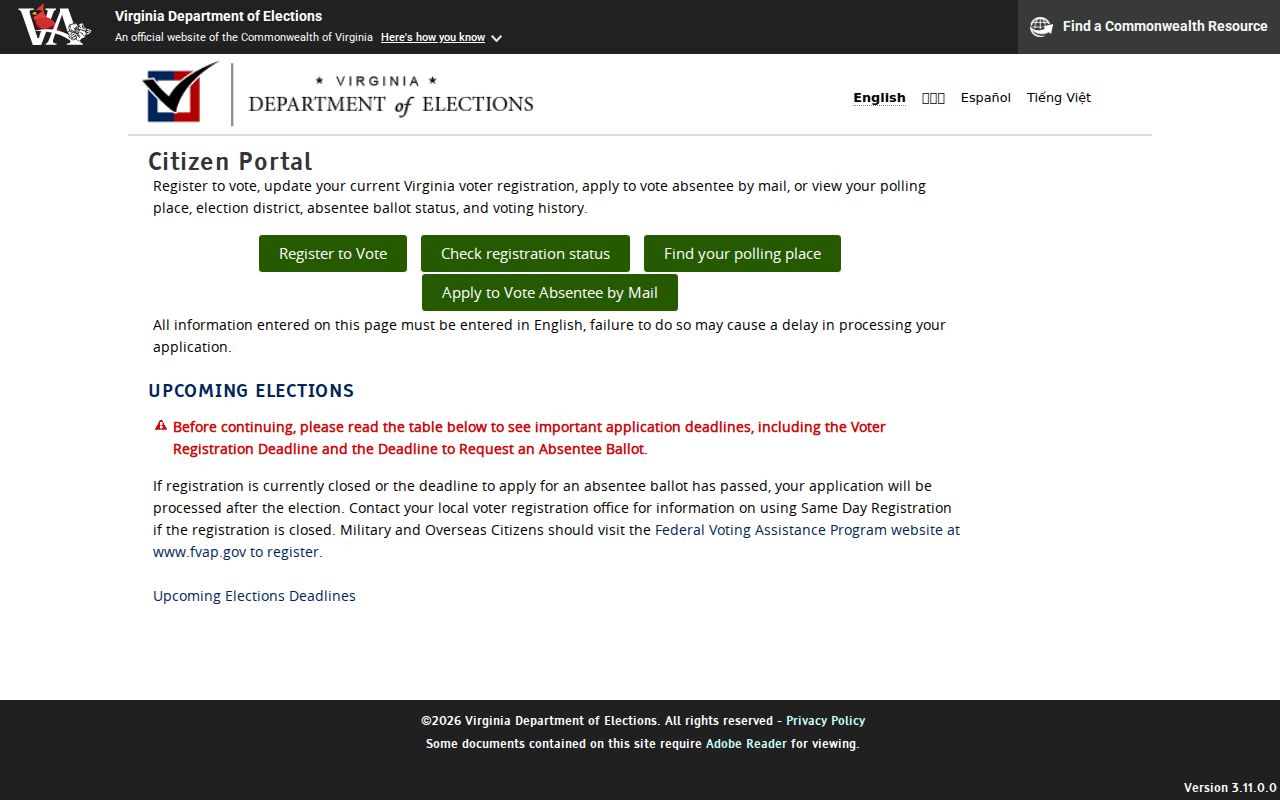
Virginia's voter portal serves the voter, not the public. It is self-service, not a general Woodbridge resident lookup. Access requires a name, date of birth, the last four Social Security digits, a locality, and certification before the individual sees registration status, polling place, district, absentee status, and voting history. Virginia registers no voters by party. The state voter guidance adds that voting history reflects participation, never ballot choices.
The Virginia Voter Information portal page displays its self-service inputs and certification notice.
Access to voter lists follows statutory categories. Certification rules apply as well. Beyond that, the Prince William Office of Elections offers registration and district resources only, with added care owed to protected voters and Address Confidentiality Program participants.
Woodbridge License Lookup Evidence
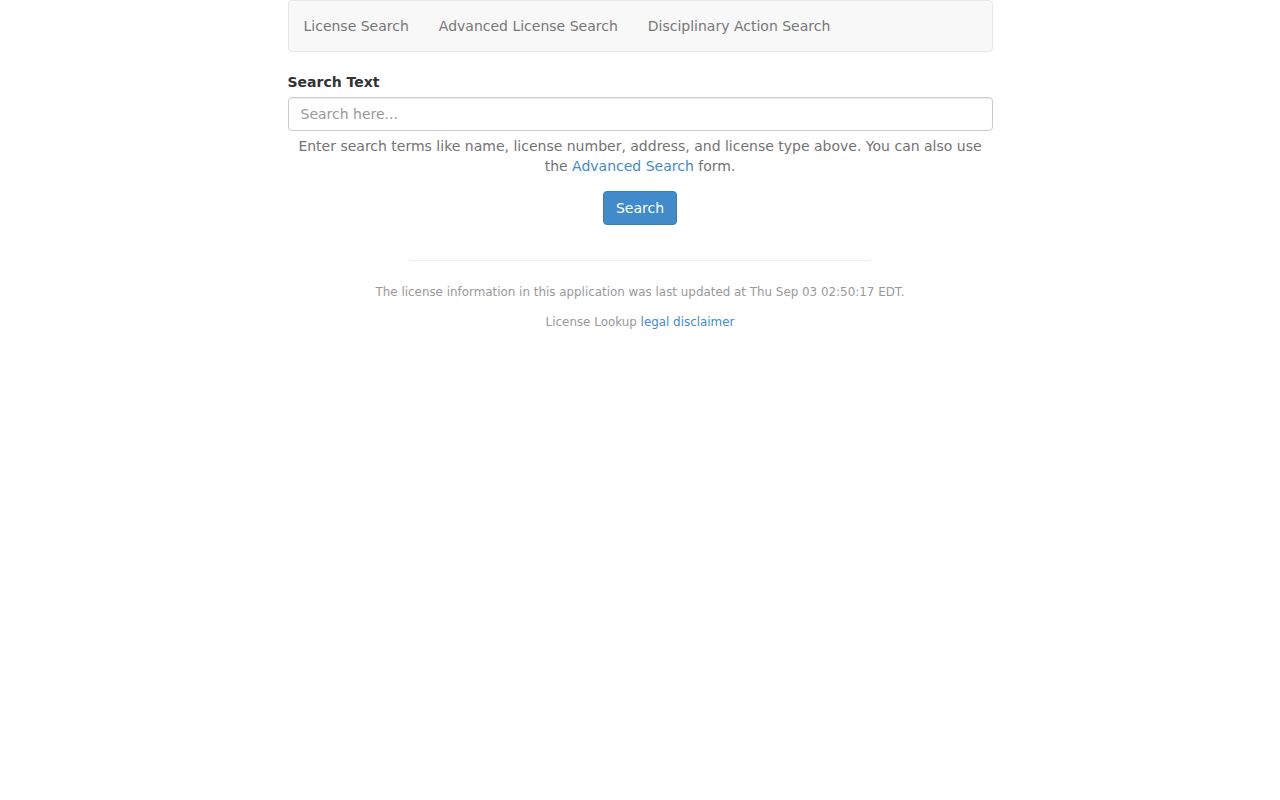
A license record answers a narrow question well. If the question is whether a person or business holds a public credential tied to Woodbridge, start with the Virginia DPOR lookup. Its search box takes a name, license number, address, or license type. An Advanced Search route offers finer filtering. DPOR itself notes that online results are not the official record. That matters here.
Treat a match as a lead, not a conclusion. Record the credential number, status, category, source date, and any listed business address. Do not assume that address is where someone lives. The license may not reflect a continuous local connection.
The DPOR interface shown here displays the Woodbridge license-verification text alongside its advanced-search entry points.
Other Virginia verification tools fill similar narrow roles. An SCC entity search or a DCJS verification may return a name, number, status, and category. It may also show a public office or business address and issue or expiration dates. None of that settles a common-name match on its own.
Anchor any result to a record identifier. Then check a second dated source before it joins a Woodbridge identity trail.
Woodbridge Custody Lookup Limits
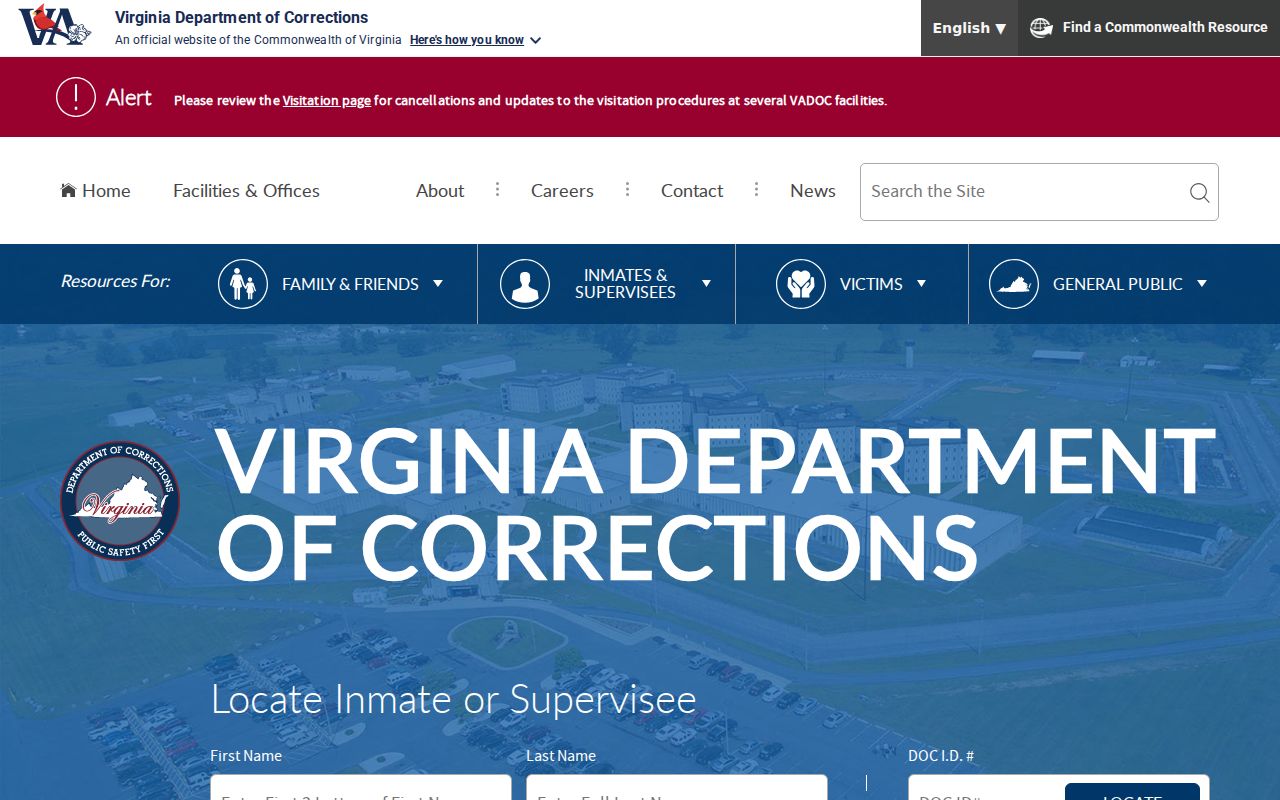
Custody status comes from its own agencies. It stays separate from a Woodbridge residents directory or resident lookup. The Prince William Adult Detention Center handles current jail questions by phone. For state custody, the Virginia Department of Corrections locator accepts a partial first name, a full last name, or a DOC ID. The agency cautions that its data updates daily yet may still be inaccurate or outdated. Local jail rosters, VADOC records, federal custody lists, and court dockets remain distinct record populations.
The VADOC locator page itself carries the update warning shown with the lookup context.
A custody result is not a court disposition. An empty result does not prove that no record exists. Keep the agency name, access date, and stated limitation with any lawful research note.
Woodbridge Resident Lookup Limits
Some records are closed by design. Virginia's Address Confidentiality Program gives eligible participants a substitute address and mail forwarding for a certified three-year period. Actual addresses stay limited to authorized officials, program staff, and law enforcement. Protected voters may be hidden or substituted in voter rolls. DMV records covering drivers, personal details, special IDs, and vehicles are restricted. The ACP statute, the DMV disclosure law, and the Virginia Consumer Data Protection Act draw boundaries. Any Woodbridge record search must respect them.
For an inaccurate government record, start with the custodian's correction, appeal, or agency procedure. The VCDPA grants qualifying consumers access, correction, deletion, and certain opt-out rights against covered controllers. This holds within its scope and exemptions. It does not promise removal of a Circuit Clerk deed. Nor does it erase a court docket or any other public record. Virginia publishes no statewide comprehensive data-broker registry or universal deletion route. Never try to rebuild a protected address from a parcel record. Do not use a delivery label or an old street directory either.
Lawful use. Use Woodbridge records for personal, historical, civic, or records-access research. Do not use public information to stalk, harass, intimidate, impersonate, or repeatedly contact another person.
A County record may exist with no direct search route to it. In that case, request it specifically under Virginia FOIA §2.2-3704. Prince William's framework allows five working days for a response. A written extension of seven more days is also possible. Name an existing, identified record. Include a date range, department, address or GPIN, and preferred format.
FOIA does not oblige the County to build a person report. Nor must it disclose exempt information. For a clerk-held instrument or a court file, the Clerk's copy request process applies instead. Note: A mistaken identity match belongs with the record custodian's correction route, not in a published profile.